
How Auto Transport Works
From the quote to the moment you sign the delivery report. Here is exactly what happens, what you need to do, and what to expect at each step.
Start With a Price
Zip to zip, in seconds.
| Mileage | $0 |
| Base fee | $0 |
| Enclosed carrier | $0 |
| Estimated total | $0 |
Lock in this rate
Send us your details and a coordinator will confirm a pickup date. Nothing is charged until a carrier is assigned.
Or call (847) 786-2226 and we will quote it on the phone.
Our Process
The Four Steps
Four steps from quote to delivery. Nothing is charged until a carrier is assigned to your vehicle.

Get your price
Enter your pickup and delivery ZIP codes. The calculator prices the real road distance between them and returns an open and enclosed figure in seconds.

Book your date
Confirm the details with a coordinator and pick a date. Nothing is charged until a carrier is assigned to your vehicle.
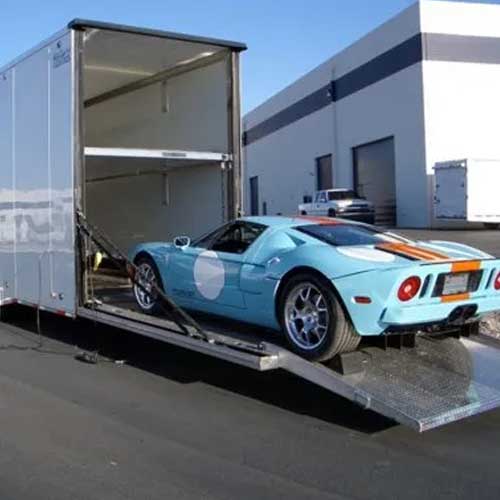
Pickup & inspection
The driver calls ahead, inspects the vehicle with you and records its condition on the Bill of Lading. You both sign it.
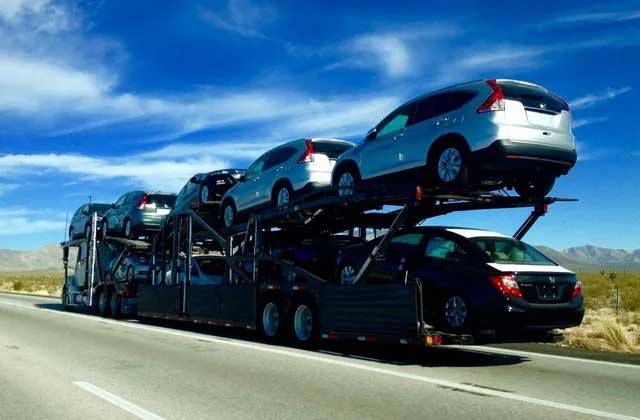
Delivery
The driver calls again before arrival. Inspect the vehicle against the same report, sign, pay the balance and you are done.
1. Getting Your Price
Enter the pickup and delivery locations — a ZIP code is most precise, but a city name works. The calculator measures the road distance between them and prices it at $1 per mile plus a $300 base fee, and shows you the number on screen before asking for anything. Estimates provided are for open carrier. Add $500 for enclosed.
What you get is an estimate. The final rate is confirmed once a carrier is assigned, and it can move with fuel prices, demand on your specific lane, whether the vehicle is oversize or modified, and how tight your dates are.
2. Booking
Send the quote through with your contact details and a coordinator calls to confirm the specifics: the vehicle's year, make and model, whether it runs, whether it has been modified, and the earliest date it can be collected.
Auto transport works on a pickup window rather than a fixed appointment — typically one to five days. Carriers build routes from multiple vehicles, and a truck heading your way has to line up with your dates. The wider your window, the better your price and the sooner your vehicle gets assigned. If a date genuinely cannot move, expedited service buys a guaranteed pickup date.
Nothing is charged until a carrier is assigned to your vehicle. At that point a deposit is taken and the balance is due to the driver at delivery.
3. Preparing the Vehicle
- Wash it. A clean car makes the pickup inspection accurate — you cannot document a scratch under a layer of road grime.
- Photograph it. All four sides, the roof, the wheels and the odometer, timestamped.
- Empty it. Remove everything valuable. Carriers allow about 100 lbs in the trunk below the window line; personal items are not covered by cargo insurance.
- Quarter tank of fuel. Enough to load and drive off, not enough to add unnecessary weight.
- Disable the alarm or tell the driver the procedure.
- Fold in the mirrors, retract or remove the antenna, and secure or remove any loose spoilers or racks.
- Check for leaks. A vehicle leaking onto the car below it is a problem the driver has to solve at the roadside.
- Leave a set of keys for the driver.
4. Pickup Day
The driver calls ahead — usually the day before and again when close. You or someone you name walks the vehicle with them. They record every existing scratch, dent and chip on the Bill of Lading, and you both sign it.
That document matters more than anything else in the process. It is the record of what condition the vehicle left in, and it is the basis of any damage claim. Read it before you sign, and take your own photos alongside it.
Carriers run 75 to 80 feet long. If your street is narrow, has low branches, or sits inside a gated community, the driver will arrange to meet you at a nearby shopping centre or open lot. That is standard and does not change the price.
5. In Transit
Drivers cover 400 to 500 miles a day. That is not them taking their time — federal hours-of-service rules cap driving at 11 hours in a 14-hour window, with a mandatory 10-hour break. Chicago to Florida is typically three to four days; coast to coast is seven to ten.
You get the driver's number at pickup and can call them directly. Your coordinator stays on the file too, so if the driver is on the road you have someone else to reach.
6. Delivery
The driver calls before arriving. Inspect the vehicle against the Bill of Lading from pickup — in daylight if at all possible, because a dented panel is difficult to spot under a street light.
If there is new damage, write it on the Bill of Lading before the driver leaves. Photograph it. A claim without a notation on the delivery report is very hard to pursue. Then call us and we file against the carrier's cargo policy on your behalf.
If everything is as it should be, sign, pay the balance and you are done.
What You Need at Each End
At pickup
Someone present to sign, a set of keys, the vehicle cleaned and emptied, about a quarter tank of fuel, and the alarm disabled.
At delivery
Someone present to inspect and sign, the balance payable to the driver, and daylight if you can arrange it.
Frequently Asked Questions
How long does auto transport take?
Transit runs roughly 400 to 500 miles per day once the vehicle is loaded, because drivers are limited by federal hours-of-service rules. Chicago to Florida is typically 3 to 4 days, coast to coast 7 to 10. Add 1 to 5 days for the pickup window on top of that.
Is my vehicle insured during transport?
Yes. Every carrier we dispatch to carries active cargo insurance, and we verify it before your vehicle is assigned. Damage claims are filed against the carrier policy. Personal items left in the vehicle are not covered.
Can I put personal items in the car?
Up to about 100 lbs in the trunk, below the window line. Carriers are licensed to haul vehicles, not household goods, and DOT weight limits apply to the whole load. Personal belongings are not covered by cargo insurance.
Do I need to be there for pickup and delivery?
Someone does. You or a named representative has to be present to sign the Bill of Lading and walk the inspection at both ends. It can be a friend, relative, neighbor, or a dealership employee.
Ready to ship your vehicle?
Get a price in seconds, or call and talk to a coordinator who can quote it on the phone.